When we see positive changes happening within the Federal Bureau of Prisons, we think it’s important to talk about those too.
From what we’ve seen and followed over the past year, there has been a noticeable amount of movement and change within the BOP – and we think that’s worth recognizing.
Does that mean everything is fixed? Of course not. Federal inmates and their families are still dealing with issues that need attention, and there is plenty of work left to do.
But progress matters.
And the BOP technology modernization announced this week could be another positive step in the right direction.
What Does the BOP Technology Modernization Actually Change?
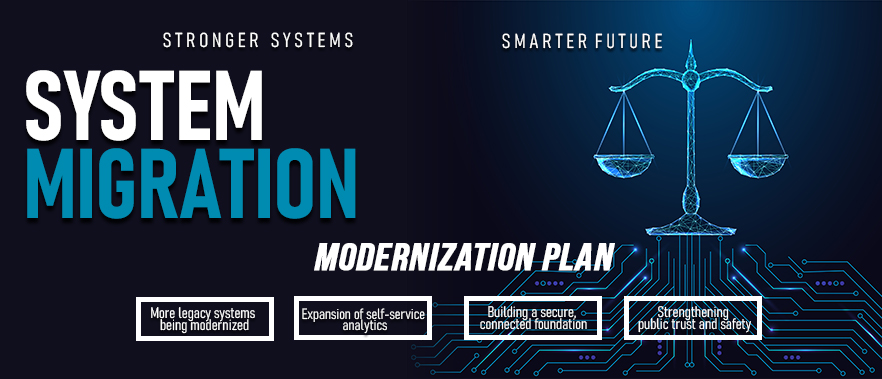
The Bureau of Prisons announced that it successfully moved its core inmate systems to a modern, secure cloud platform.
Some of the technology behind those systems had been in place for decades. In fact, according to BOP, the technology foundation being modernized had served the Bureau since 1978.
At first glance, a technology upgrade may not sound like something that would have much impact on an incarcerated person or their family.
But when you look at what these systems actually support, it becomes much more significant.
BOP says these systems are used for information involving things like custody classification, medical information, rehabilitative programming and inmate records.
They also affect something families care very much about: case updates and release calculations.
Fewer Delays and Fewer Errors?
This is one of the parts of BOP’s announcement that really caught our attention.
The Bureau acknowledged that outdated systems can slow down case updates, program access and release calculations.
According to BOP, the modernization should allow information to be processed faster and more accurately, leading to fewer delays, fewer errors and clearer communication.
If you’ve been navigating the federal system for any length of time, you probably understand why that matters.
We regularly hear from people trying to figure out why a calculation hasn’t updated, why information on one document doesn’t seem to match another, or why a change they were expecting hasn’t shown up yet.
Sometimes the answer is simply:
“The system hasn’t updated yet.”
When you’re waiting on information that could affect programming, prerelease planning or a release-related date, that isn’t a minor inconvenience.
There’s a real person… and a real family… behind those numbers.
If modernizing these systems helps reduce some of those delays and errors, that’s a change worth recognizing.
The First Step Act Connection
This may be the part federal families will be most interested in.
The BOP specifically mentioned the First Step Act in its announcement.
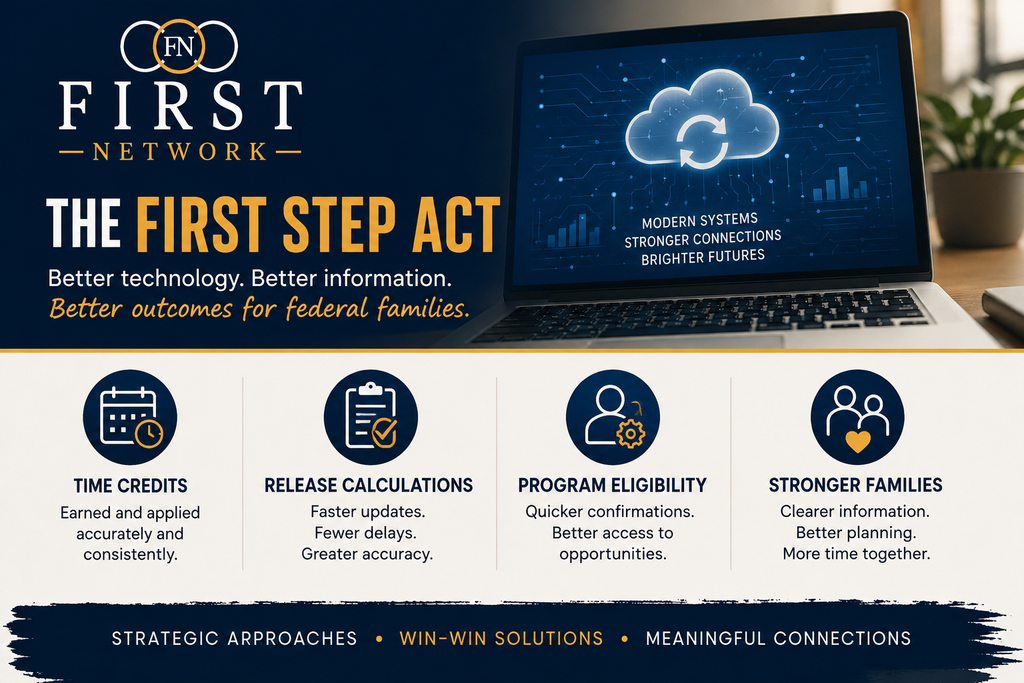
According to the Bureau, modern infrastructure should allow BOP to respond more quickly to legislative changes, including updates under the First Step Act. BOP says this can help ensure benefits reach eligible individuals sooner and more consistently.
That caught our attention.
First Step Act Time Credits have been a major source of questions and confusion for federal inmates and their families.
How many FSA Time Credits have been earned?
Have those credits actually been applied?
Why did a date change?
Why didn’t a date change?
What do all of the different dates on the paperwork actually mean?
BOP has also published a Federal Time Credit Application Guide designed to explain how FSA Time Credits are earned, calculated and applied.
A technology upgrade isn’t going to answer every one of those questions or eliminate every problem.
Staff still have to enter information correctly. Laws and policies still have to be applied correctly. Individual eligibility requirements still matter.
But giving staff faster and more reliable systems to work with is a positive development.
We’ve Seen Movement… and That’s Worth Recognizing
It’s easy to focus only on what isn’t working, especially when a problem affects someone’s freedom or their family.
And when something isn’t working, we absolutely believe it should be addressed.
But we also believe in recognizing progress when we see it.
From what we’ve observed over the past year, there has been a noticeable amount of activity and change within the BOP.
We’ve seen a number of announcements and changes involving First Step Act implementation, prerelease placement, reentry, communication and family connections.
For example, BOP announced an updated Time Credit Application Program intended to provide more useful conditional placement information involving both the First Step Act and Second Chance Act.
More recently, BOP announced an initiative involving the expanded use of minimum-security camps for transitional placement for certain individuals preparing to return to their communities.
Now we’re seeing a major investment in modernizing the technology that supports BOP’s day-to-day operations.
Not every change happens as quickly as families would like. And announcing a change is different from seeing that change work consistently across institutions.
But movement matters.
When BOP takes steps intended to make information more accurate, reduce delays and help eligible individuals receive benefits more efficiently, we think it’s fair to recognize that.
What This Does NOT Mean
We also want to be careful not to turn a positive announcement into false hope.
This technology upgrade does not create additional FSA Time Credits.
It does not reduce anyone’s sentence.
And it does not automatically move anyone’s release date.
This is an infrastructure change.
What matters is what that improved infrastructure may allow the BOP to do better going forward.
According to the Bureau, case managers should be able to update records more quickly, eligibility for rehabilitative programs can be confirmed sooner, and leadership can access accurate information faster.
The BOP also says the modernization will help the agency respond more quickly when legislative changes need to be implemented.
Those could be meaningful improvements.
But ultimately, the real measure of success will be what happens in practice.
Now We Watch What Happens

The technology has been upgraded. Now we get to see whether incarcerated individuals and their families begin noticing a difference.
Will calculations update faster?
Will there be fewer discrepancies?
Will case managers have access to more current information?
Will program eligibility be determined more quickly?
Will future First Step Act changes be implemented more efficiently?
Will families experience fewer delays when trying to understand what is happening with their loved one’s case?
Those are the things we’ll be watching.
Technology alone won’t solve every challenge within the federal prison system. People, policies, training, consistency and accountability still matter.
But modernizing systems that support thousands of incarcerated individuals is an important investment.
And we think it’s okay to say when something appears to be moving in a positive direction.
There is still plenty of work ahead. We’ll continue asking questions, sharing information and speaking up when something isn’t working.
But we’ll also recognize progress when we see it.
This looks like progress.
And we’re glad to see it.
— FIRST Network
Learn More
• BOP: BOP Brings Decades Old Systems Into a Modern Era
• BOP: First Step Act Information & Resources
See a concern like this?
Document a facility issue in two minutes. Anonymous options available.